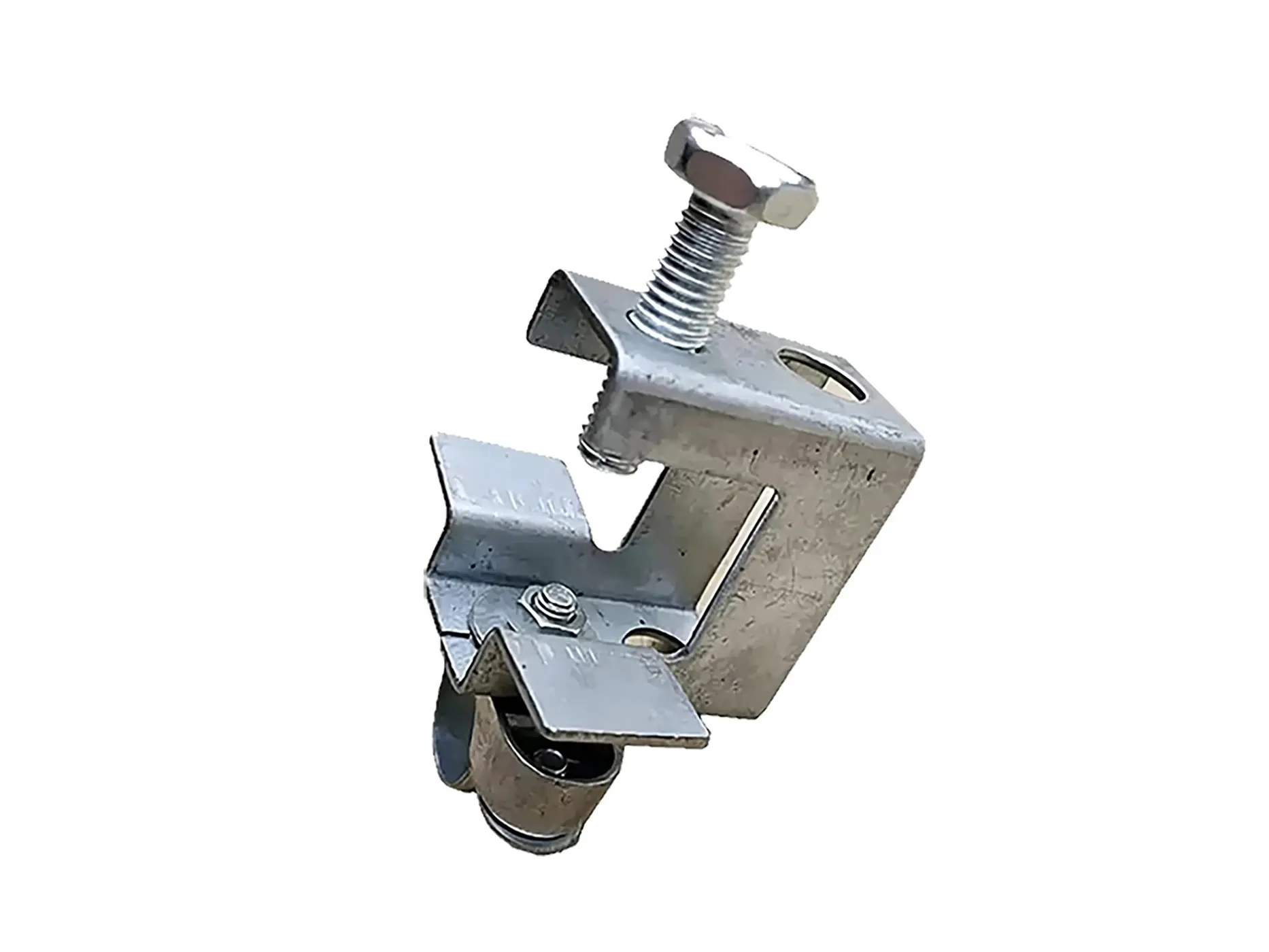
Some beam clamps create an attachment point on a steel flange. Others combine the flange clamp with a second section that holds conduit. The two products can look similar in a search result, yet they connect the supported item in different ways. For buyers sourcing electrical and MEP hardware, that distinction should be settled before comparing prices.
Y.F METAL lists a pressed-steel beam clamp with conduit clamp alongside standard pressed-steel and wide-jaw malleable iron models. The product photos below show why a clear drawing and connection specification matter more than the search term “steel beam clamp.”
The main difference is the supported connection
A beam clamp with conduit clamp has a beam-gripping section and an additional conduit-holding part in the same assembly. In the first photo, a top screw acts on the beam jaw, while the lower section is shaped to retain a separate round item. The intended conduit size and retention detail must be confirmed for the exact model.
A standard set-screw beam clamp grips a flange and offers a hole or other connection point for a compatible rod, hanger or accessory. It does not, by itself, establish how conduit will be held. If the project uses a separate conduit hanger, the buyer needs to specify that hanger and its connection to the beam clamp as a complete assembly.
Use the photos to identify the design, then measure the fit
The supplied photos show several jaw profiles and set-screw arrangements. They are useful for identifying the general design, but the view alone cannot establish flange capacity, thread size, coating specification or rated load.

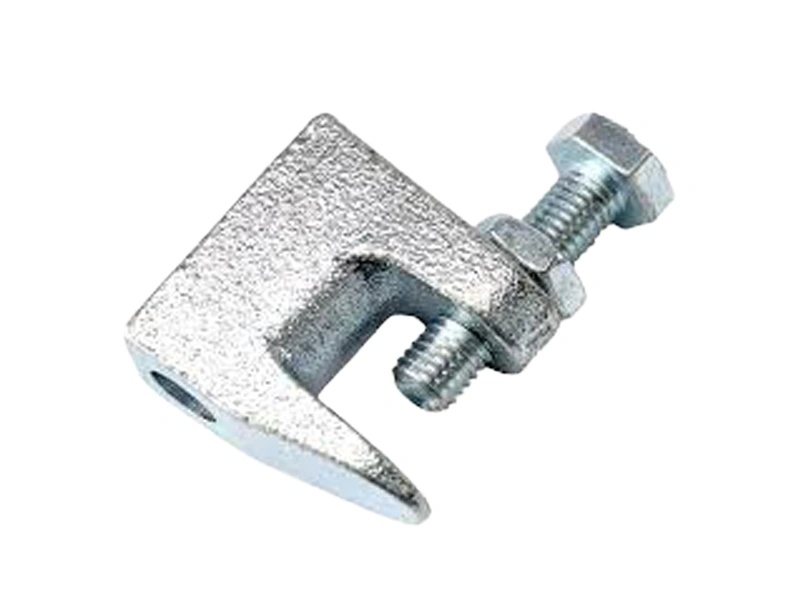
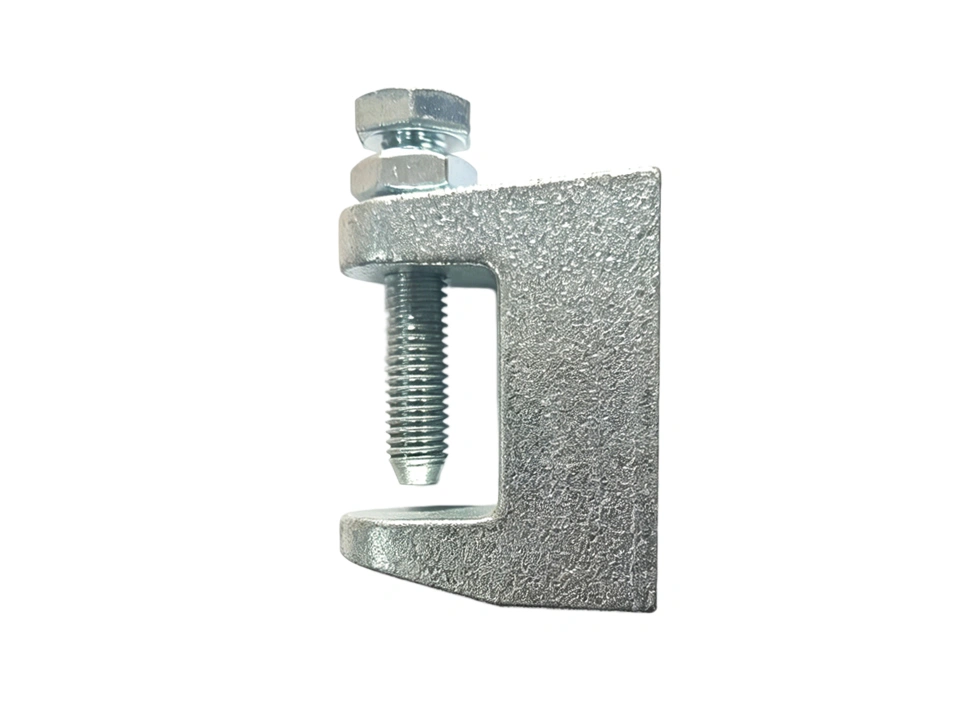
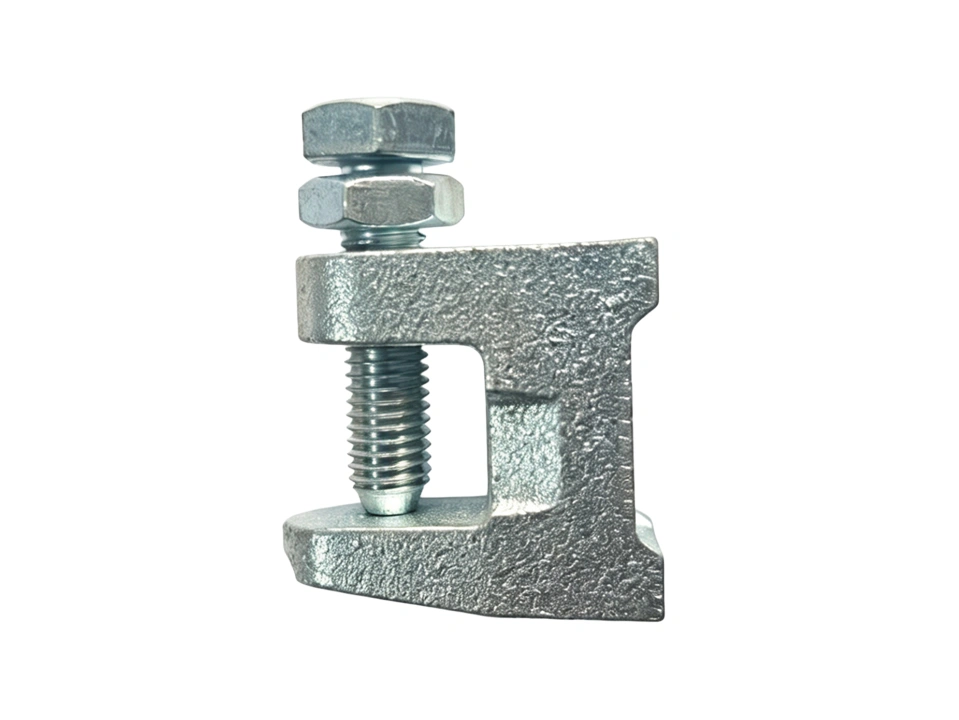
To confirm fit, send the actual flange thickness, flange orientation and the dimensions of the item to be attached. For a conduit-holding assembly, include the conduit type and outside diameter required by the project. For a rod or hanger connection, state the thread diameter and pitch, hole position and mating hardware. A photo can start the discussion; the approved drawing should define the order.
Do not transfer a rating between lookalike clamps
These images do not prove that the clamps share a working load limit, installation torque or permitted load direction. Even two products with similar bodies can use different materials, dimensions and connection methods. Request the rating and installation instructions for the exact part number and intended assembly. Do not describe a pictured clamp as a lifting clamp or assume it is suitable for side loading without specific supporting documentation.
The finish also needs a written specification. A bright metallic appearance in a product photo does not identify the coating process or its suitability for the intended environment. State the required finish in the RFQ, and agree on any inspection or test documents before production.
What to put in a beam clamp RFQ
- Product layout: conduit clamp integrated with the beam clamp, or a standard clamp with a separate hanger.
- Beam interface: flange thickness, orientation, jaw opening and required seating dimensions.
- Supported interface: conduit outside diameter and holder detail, or rod/hanger thread and connection dimensions.
- Application: load requirement, direction, installation conditions and project approval requirements.
- Commercial details: finish, marking, quantity by size, packaging, destination and any required documents.
For a broader overview of beam clamp sizes and connections, read our steel beam clamp buyer's guide. If you are comparing samples from different suppliers, our quality comparison article covers details to inspect beyond the surface finish.
Send the connection details with your inquiry
Browse the conduit clamp assembly and beam clamp range, then contact Y.F METAL with your drawing, flange size, supported connection, quantity and destination. We can confirm the model and quotation scope against the specification you provide.
← Back to News